

A photograph can introduce an evening dress, but it cannot answer every question a boutique buyer needs to settle before ordering. This guide compares three actual EY-TAY styles through their model codes, fabric descriptions and size packs. It also separates details shown on the product pages from details a buyer should confirm.
Quick Answer: Buying Wholesale Evening Dresses Online
Read the product code, images, description and SET line together. A fabric name does not establish the exact fibre percentages; an S, M or L label is not a garment measurement; and a stock indication does not establish a delivery date. If a detail affects your buying decision and is not stated for that model, ask for confirmation before ordering.
What Should You Verify Before Buying Evening Dresses Online?
An attractive image and a suitable wholesale order are not the same thing. Images show the overall appearance of a style, but they cannot by themselves confirm whether the garment is lined, how much it stretches in a particular area or the measurements of a given size. For a boutique, these missing details matter when staff must explain a dress to a customer or when an online listing has to be accurate.
Start by matching the dress you like to its exact model code. Two black dresses can have different fabric descriptions and different size distributions. Record the code beside the information you intend to use; this keeps subsequent questions about measurements, price or preparation attached to the right model.
The examples below use information available on EY-TAY product pages checked on 29 September 2026. This is not a physical sample test, laboratory assessment or sales ranking. It does not claim that one style will sell more, fit every customer or be prepared on a fixed date.
Use this method when browsing the current wholesale evening dress collection. For the general meaning of unit prices, packs and minimum quantities, see the separate size SET and unit price guide.
Three EY-TAY Evening Dress Styles Compared
These examples differ in more than colour. Their titles use different fabric descriptions, and their listed size packs are not all the same. That makes them useful for a more precise question than “Which one looks best?”: what can a buyer actually establish from the available information?

The reviewed product page showed a SS-MM-LL:6 SET: two S, two M and two L garments in one pack. The title mentions modal fabric. The exact fibre composition should be checked on the garment label or confirmed for this model; the word “modal” alone does not provide percentages.

The reviewed product page showed a SS-MM-L:5 SET: two S, two M and one L garment. The title describes velvet fabric. Exact fibre content, lining and garment measurements must be considered separately rather than inferred from that description.
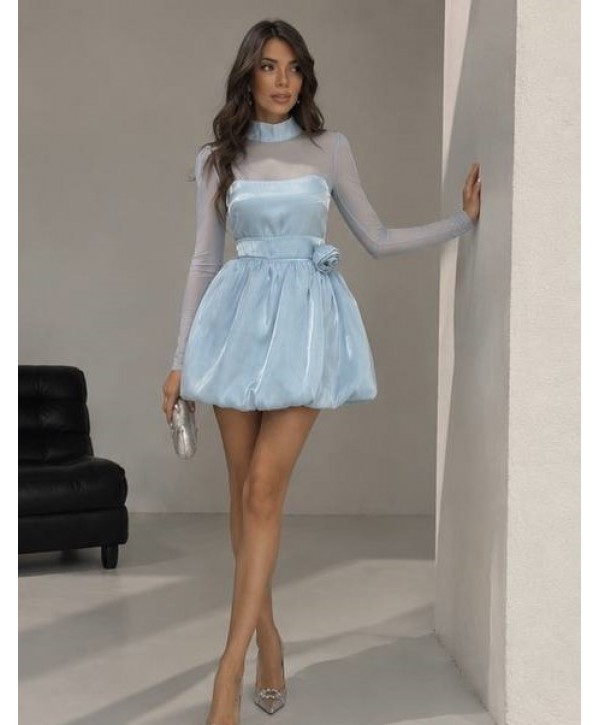
The reviewed product page showed a SS-MM-L:5 SET: two S, two M and one L garment. “Satin” describes the fabric in the title; it does not by itself mean silk content, a lining or a particular amount of stretch.
| What to Compare | 252213 | 252109 | 251572 |
|---|---|---|---|
| Colour and fabric term in title | Black / modal | Black / velvet | Blue / satin |
| SET on review date | SS-MM-LL:6 | SS-MM-L:5 | SS-MM-L:5 |
| Garments in one pack | 2 S + 2 M + 2 L | 2 S + 2 M + 1 L | 2 S + 2 M + 1 L |
| Exact fibre percentages | Not stated as percentages in this review; confirm for this model. | Not stated as percentages in this review; confirm for this model. | Not stated as percentages in this review; confirm for this model. |
| Lining, stretch and measurements | Not inferred from photographs or fabric names. Ask for model specific information if it affects your purchase. | ||
| First buying distinction | One more L garment per pack than the other two examples. | The same colour name as the modal style does not mean the same fabric or garment. | The same SET as the velvet style does not mean identical fit or measurements. |
Read the Photographs Alongside the Product Information
Visual presentation matters to boutiques and online stores. Yet lighting, camera angle, styling and display settings can change how a colour or surface appears. A dark tone in one image may not match the tone you have in mind for a window display, a coordinated collection or a customer's event.
252213 and 252109: the same colour label is not the same choice
Both examples are listed as black. One title says modal and the other says velvet. A buyer should therefore compare the visible surface and the garment's overall appearance separately, rather than treating them as interchangeable simply because their colour names match. A photo cannot establish how a fabric feels to the touch or how heavy it is.
251572: check the blue tone and the surface separately
The word “blue” does not fix an exact shade. If tone matching matters for an event or for other products in your shop, review all available angles. Ask whether another detail image or video exists if that would affect the decision. Do not assume additional material is available for every style.
- Have you checked front and back views where both are available?
- Can you see the fastening, neckline, straps, hem or decoration that matters to your buyer?
- Are photographed accessories explicitly included in the product description?
- Are the permitted uses of images and descriptions clear for your own online store?
This approach gives your team a more dependable description of what it can tell a customer, instead of relying only on whether the photograph looks appealing.
Do Not Turn a Fabric Name into an Unverified Specification
A title is a starting point, not a complete technical sheet. “Modal” should not be expanded into a claim of 100% modal, “satin” into a claim of silk, or “velvet” into a precise fibre blend. The examples here do not supply a verified percentage composition for each garment, so this guide does not invent one.
If your customer needs a particular fibre, a lined garment or a defined stretch, turn that requirement into a specific question before buying. “What fibre percentages are written on the label of model 251572?” can produce a clearer answer than “Is it good fabric?” If stretch matters, specify the garment area you mean.
Care instructions should likewise follow the actual garment label. Trims, decoration and multiple components can make a single generic care recommendation unsuitable. A buyer preparing product copy should use confirmed instructions for the specific dress.
How Do These Size Packs Affect a Boutique's Buying Plan?
The clearest commercial difference among these examples is the number of L garments per pack. Model 252213 includes two L garments; each of the other models includes one. Seeing S, M and L on all three listings does not mean that a shop receives the same number of each size.
Illustrative calculation: If the reviewed packs remained unchanged and a buyer took one pack of each of the three styles, the total would be 16 garments: 6 S, 6 M and 4 L. This is pack arithmetic, not an order recommendation. It does not establish that every commercial requirement is met or that these styles are currently in stock.
If your own sales records show stronger demand for L, compare the number of L garments within each pack as well as the total number of pieces. Do not assume that a ready size pack can be rearranged by removing or exchanging individual sizes. Check the current pack structure and buying terms for each style.
When asking for measurements, name the size and the measurement points you need, such as M size bust width, waist width and garment length. Confirm whether a number describes flat width or full circumference, and how it was measured. No centimetre chart is fabricated here because verified measurements for these three examples were not available for this review.
Compare the Pack Cost, Not Only the Unit Price
A price for one garment is different from the amount payable for the minimum pack. In the reviewed examples, one style had six pieces per SET and two had five. Looking only at unit prices would therefore miss a key part of the buying commitment.
This guide does not reproduce fixed prices that can become outdated. Check current unit prices, the minimum quantity and currency in the live collection before making a decision. Confirm whether shipping and any applicable additional charges are included in a quotation. A lower unit price does not automatically make a style the better choice for your shop.
In your comparison sheet, keep the model code, pieces per pack, number of packs and total number of garments on the same row. That makes it easier to see how much inventory is tied to each design and size distribution. The general calculation method is explained in the size SET, unit price and minimum quantity guide.
Different Checks for a Physical Boutique and an Online Store
The same dress can serve different needs in different shops. In a physical boutique, a customer may try it on. Online, the written details and measurements carry more of the explanation before a customer makes contact. This does not prove that one style will sell better in either channel; it changes what the retailer needs to verify.
Compare the size distribution with your actual customer demand. Prepare accurate answers about the measurements and wearing details that may come up during fittings.
Make sure the name, images, verified product details and any available measurements describe the same model. Do not add a technical feature to your listing solely because it appears likely from a photo.
Clarify the customer's event date, intended look and preferred colour. Confirm order preparation and carriage separately; do not assume a style will arrive by a particular date.
There is no universal winner among these three examples. The right purchase depends on what you can verify about each dress and how that information matches your shop's customers and buying plan. Use your own sales history instead of unsupported claims such as “the bestselling colour” or “a fit for everyone.”
Questions to Ask Before Ordering, Using the Model Code
A model specific enquiry keeps similar dresses from being confused. The following message is an example of a request for information; it does not reserve stock, fix a price or create an order.
“I am reviewing black velvet evening dress 252109 for my boutique. Could you confirm the current SET and minimum quantity? Is information about the lining and fibre content available? Which measurements can you share for size M? If another back view or detail image exists, I would like to see it. Could you also confirm preparation and shipping information for my order?”
- Model: Have you recorded the correct code, colour and current listing?
- Pack: Did you verify each style's current SET and the total number of pieces?
- Garment: Are the lining, fibre content, measurements and construction details relevant to your decision clear?
- Cost: Have you separated the unit price from the pack total and checked the quotation scope?
- Timing: Have you confirmed preparation and transport times separately?
- After delivery: Have you read the applicable sales terms and the process for reporting a missing or different item?
The broader purchase process is described in how to place a wholesale order. This product comparison does not alter the sales terms or promise a particular return outcome.
Useful Resources When Moving from Review to Order
Questions About This Evening Dress Comparison
Do models 252213, 252109 and 251572 have the same size pack?
No. On 29 September 2026, model 252213 had a six piece pack containing two S, two M and two L garments. Models 252109 and 251572 each had five piece packs containing two S, two M and one L garment. Check the current SET before ordering.
Does a modal, velvet or satin label state the exact fibre percentages?
No. This review does not infer exact fibre percentages from fabric names. Buyers who require a particular composition should rely on the garment label or information confirmed for the specific model.
If two styles have the same SET, are their size M measurements identical?
Not necessarily. SET describes the sizes and quantities within a pack. The same size letter can have different centimetre measurements in different styles. Ask for the required measurements using the model code and size.
Is this comparison based on physical quality tests of the three dresses?
No. It is based on information on EY-TAY product pages checked on 29 September 2026. It does not present physical sample tests or laboratory results, and it does not assign unverified features to the garments.
Which of these dresses will sell best in my boutique?
This review does not rank future sales. Consider your own customers, their occasionwear needs, verified garment information and the sizes they actually buy. No sales result is guaranteed for any style.
What should I do if a dress featured here is no longer in stock?
Review the current wholesale evening dress collection for alternatives. Do not assume that a similar looking style has the same fabric, fit or SET; check the information attached to its own model code.
Choose Evening Dresses with the Product Details in View
Compare current EY-TAY styles through their model codes, descriptions and size packs. Confirm the details that matter to your shop before building your assortment.
EVENING DRESS COLLECTION NEW ARRIVALS ORDER INFORMATION